

We Don't Sell Credit Here
The following article is offered for informational purposes only, and is not intended to provide, and should not be relied on, for legal or financial advice. Please consult your own legal or accounting advisors if you have questions on this topic.
This post is inspired by Stewart Butterfield's famous internal memo "We Don't Sell Saddles Here," written before Slack launched. I wrote a version of it for the Flex team. This is the public adaptation, because I think the thinking applies beyond our walls.
We know we have something valuable at Flex. We can feel the energy. But the value is not what most people think.
Our customers tell us they want credit. Really, they want cash, and as much of it as possible. Sometimes it's "everything in one place." They want better terms. They want bill pay. They want expense management. They want a feature or a product they already understand in a category they already purchase in.
What they want is all over the place.
But the reality is that most of our customers are not looking for what Flex intends to be: a product that transforms how owners manage their finances from start to finish. Most of our current and future customers don't yet realize they need what Flex will become. They aren't actively searching for it, even if they bump into our credit and banking solutions and are very happy with them.
That's our challenge. Our job isn't just to build a great product for what's on the website today. It's to translate the vision behind the website. To deliver it on a silver platter to customers before they even ask for it. To help people see why it matters in their world. To translate the value of Flex into terms that resonate with them from the moment they first hear about us to the moment they can't imagine running their business without us.
We must deliver that moment for owners equivalent to the first time you called an Uber.
This isn't just one team's job. Every team at Flex contributes to this: intuitive onboarding, elegant UI, seamless performance, frictionless support. Every interaction with our brand and product should reinforce why Flex is indispensable for business owners from the day they start their company to when they exit.
Defining Our Own Market
We are not here to compete in a crowded space of point solutions. Period.
We are not up against Brex or Ramp or Mercury or Bill.com. And certainly not Amex or JPMorgan or Capital One. We are not just another spend management platform, corporate credit card, bank, ERP, bill pay solution, or financial tool.
We are defining a new category. One that doesn't just optimize existing workflows but fundamentally reshapes how owners and their businesses operate.
There is no category of "owner finance." We are creating it.
That means we need to think differently. Everyone says it. Nobody does it. You must empathize with owners and the people who work for them to best satisfy their problems. We can't sell based on a checklist of features. We are not a line item in a budget. We are an investment by owners to make their life easier and make their companies grow, adapt, and thrive.
All companies in our adjacent spaces sell products. We sell financial peace of mind for owners.
We are the space in between. We are our own category.
Sell the Change, Not the Product
Real innovation is measured by behavior change. I want you to really think about that. What behaviors are you actively trying to change when you ship a product? When you talk to a customer? If the answer isn't clear, you are not on the right track.
That's the standard we hold ourselves to. When owners adopt Flex, we're not just giving them a better tool. We're changing the way they think about managing their businesses. We're making it so easy they no longer have to think. We're giving them clarity where there was previously noise. We're freeing up time, resources, and mental energy so they can focus on what actually matters.
But selling change is hard. And it is very different from what is successful for us today. We will battle even our own success to date here.
Selling this change to customers requires a big enough promise to make the switch worth it, and flawless execution to deliver on that promise. If we want owners to change how they operate, we have to make that change feel effortless. And we'll probably need to do it over time with each step logically progressing them forward.
So every decision we make should be centered on this core question: how do we make life as easy as possible for owners and stick it right in front of them in the easiest manner?
Make It Frictionless
People don't tolerate friction in products they didn't even know they needed. That means our execution must be exceptional. Every unnecessary click, every moment of confusion, every delay is a reason to walk away.
Assume your user does not care about the thing they are doing. Look for opportunities to automate and then respect their time when we fail to automate.
A slow-loading page, an unintuitive flow, a broken link. These are not small issues. They are the difference between adoption and abandonment when we have an actual innovation we're trying to get customers to use. If we want owners to see Flex as essential, we need to make it feel indispensable from the very first interaction.
We need to show, not tell. And earn our users' trust along the way.
What We Are Actually Doing
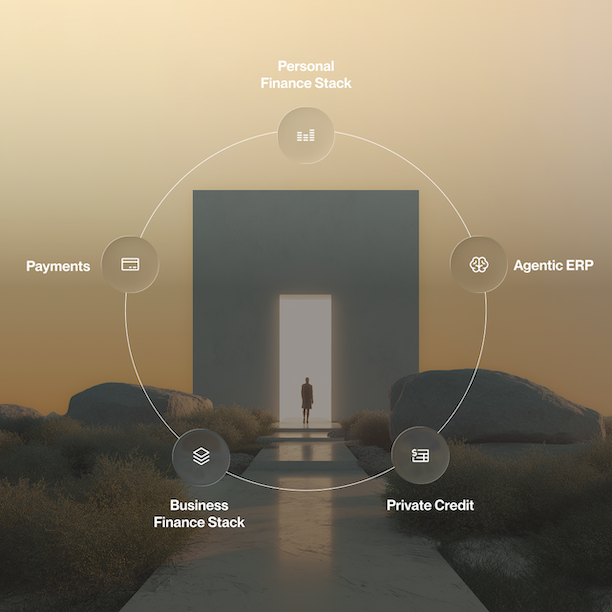
We are examining the lifecycle of a dollar from the moment a business borrows it, earns it, or spends it, all the way to when the owner eventually spends that dollar personally.
We are building the financial rails required to track this lifecycle. We are delivering tools and products at each stage of that journey to reduce the friction for owners that exists today. These tools number in the dozens. We are rebundling them.
We expect a compounding effect of having these tools in one place when it comes to rates, workflows, entities, and stress.
We are looking for ways to make what was complex fully automated, or a single click. We are delivering a cohesive, simple, elegant, purposeful design. We are doing this because it has to be this in order to satisfy the thesis of Flex. We must ask ourselves what we can cut out of the owner's lives in order to make it easier for them. That's how the design becomes elegant.
We are solving the problems for business owners that they struggle to articulate. We are making it so simple that it's easy for customers to digest and use.
Why This Matters
We're not building Flex to be small. We're building it because owners deserve better.
Owners are a neglected group. They're usually naive about what's possible because no one has ever shown them. David Toro, our General Counsel, put it well: why does it have to be the case that your life gets increasingly stressful the more successful you are when it comes to handling your finances as an owner? It doesn't. That's the gap.
If we do this right, we won't just be a successful company. We'll be the company that redefines how owners run their lives. And we'll own the entire financial stack to get there.
That's the mission. That's why we're here. Now let's go build it.















.png)