


- Unsecured debt is borrowing that does not require collateral.
- Your business assets are not pledged or encumbered.
- Unsecured debt can preserve flexibility in your capital stack.
- It is often faster and simpler to implement than asset backed financing.
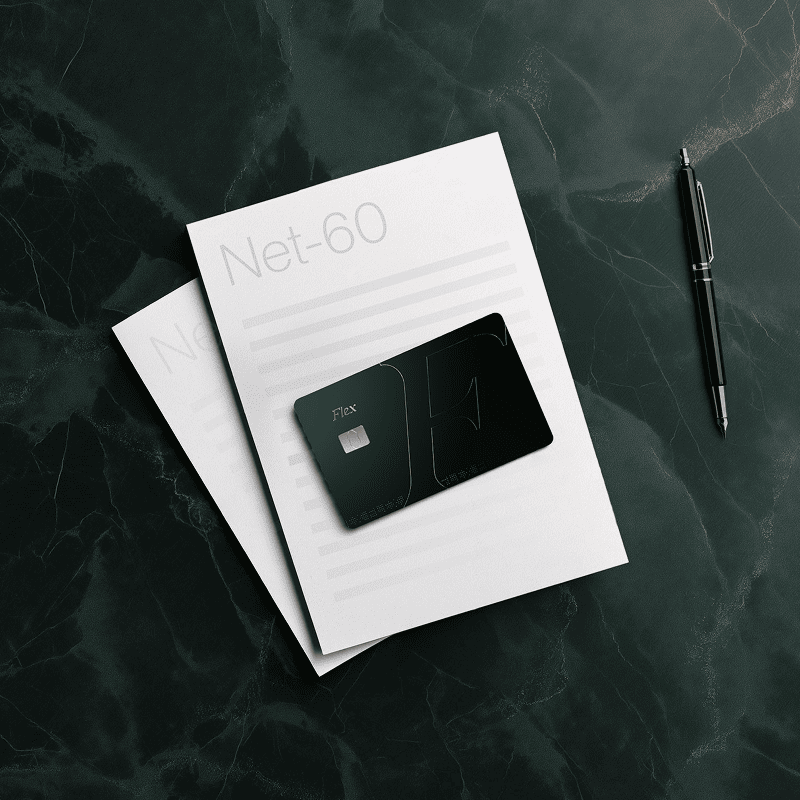
- The Flex net-60 credit card is an unsecured option that provides 60+ days of float without tying up collateral.
What is Unsecured Debt and Why Does it Matter?
The following article is offered for informational purposes only, and is not intended to provide, and should not be relied on, for legal or financial advice. Please consult your own legal or accounting advisors if you have questions on this topic.
In my conversations with founders and finance leaders, one question comes up often and usually quietly:
What is unsecured debt and should I be using it in my business?
Debt is not inherently good or bad. It’s a structure. The real question is whether that structure works in your favor.
Unsecured debt, when used intentionally, can be one of the cleanest forms of leverage available to a growing company.
What is Unsecured Debt?
At its simplest, unsecured debt is money borrowed without putting up specific assets as collateral.
There is:
- No lien on your inventory
- No claim on your equipment
- No direct security interest in your receivables
- No asset pledged against the balance
When someone asks me what does unsecured debt mean in practical terms, I explain it this way:
It means your business is borrowing based on its financial strength and underwriting profile, not on a specific asset that can be seized.
The lender evaluates risk through your company’s performance, structure, and credit profile. Not through ownership of your physical or financial assets.
That distinction matters more than most operators realize.
Why Unsecured Debt Matters for Growing Businesses
Unsecured debt is often misunderstood because people associate security with safety. In lending, security refers to collateral. It doesn’t necessarily mean a better outcome for the borrower.
From a business owner’s perspective, unsecured debt offers several meaningful advantages.
1. Your Assets Stay Unencumbered
When you take on secured debt, you are pledging something of value. That could be:
- Inventory
- Equipment
- Property
- Receivables
With unsecured debt, those assets remain free.
This matters because:
- Future financing options stay open
- You avoid stacking multiple liens on core assets
- Your balance sheet remains cleaner
For companies planning to scale, raise capital, or add facilities later, preserving asset flexibility is often strategic.
2. Cleaner Capital Structure
Unsecured debt typically doesn’t interfere with senior banking relationships in the same way asset-backed facilities can.
It can:
- Sit alongside existing credit lines
- Support working capital needs
- Add flexibility without restructuring primary facilities
For operators who already have established banking relationships, this is important. You gain additional leverage without overcomplicating your capital stack.
3. Non Dilutive Growth
Equity is expensive. It requires giving up ownership and long term upside.
Unsecured debt, when used responsibly, allows companies to:
- Extend runway
- Invest in growth initiatives
- Smooth short term cash flow gaps
All without dilution.
The key is discipline. Debt should support revenue generating activity or operational efficiency, not mask structural issues.
4. Speed and Simplicity
Asset backed lending often involves:
- Appraisals
- Collateral documentation
- Ongoing compliance and reporting
- Legal complexity
Unsecured products are typically more streamlined. Approval is based on underwriting rather than asset valuation.
In fast moving environments, speed is not a luxury. It is a requirement.
Where Flex Net-60 Fits In
Flex offers a net-60 business credit card that provides unsecured debt.
That structure is intentional.
With Flex net-60:
- No specific assets are pledged as collateral
- There is no need to encumber inventory or receivables
- Businesses receive up to 60 days of float
In practice, this means companies can:
- Pay vendors today
- Preserve operating cash
- Align expenses more closely with incoming revenue
For example:
- A company investing in marketing can fund campaigns now and settle balances once revenue cycles catch up.
- An ecommerce brand can manage inventory purchases without immediately draining liquidity.
- A services firm can bridge the gap between payroll and client payments.
Because the facility is unsecured, it doesn’t tie up the underlying assets driving the business.
That flexibility is often the difference between reactive cash management and intentional capital strategy.
What Does Unsecured Debt Mean in Real Terms?
When founders hear the word debt, they often focus on risk.
In reality, unsecured debt shifts the conversation from asset risk to operational performance.
You are not risking a specific piece of property. You are making a calculated decision about cash flow timing.
That shift creates space.
Instead of asking, “what happens to my assets if something goes wrong,” the better question becomes:
“How can I structure my obligations to support growth without sacrificing control?”
Unsecured debt, particularly short-term working capital tools like net-60, can answer that question.
When Unsecured Debt Makes the Most Sense
Unsecured debt is especially effective when:
- Revenue is predictable
- Cash flow timing gaps exist
- Growth opportunities require near term capital
- Ownership wants to avoid dilution
- Asset flexibility is a priority
It’s less about borrowing more and more about borrowing intelligently.
The goal is not leverage for its own sake. The goal is optionality.
Final Thoughts
Unsecured debt is not about recklessness, but about structure.
When thoughtfully deployed, it allows businesses to maintain control of their assets, preserve ownership, and operate with greater liquidity.
Flex net-60 is built on that principle. It offers unsecured working capital designed to move with your business, not against it.
In growth environments, time and flexibility are strategic assets. The right form of debt should protect both.
Ready to take advantage of Flex’s unsecured net-60 credit card? Reach out to get started.
©2025 Flexbase Technologies, Inc., all rights reserved. Flex products may not be available to all customers. See the Flex Terms of Service for details. Terms are subject to change.
Flexbase Technologies, Inc. (Flex) is a financial technology company and is not a bank. The Flex Business Credit Card is issued by Lead Bank, pursuant to a license from Visa U.S.A. Inc. and is only available to eligible commercial entities. Fees and terms and conditions apply. Applicants are subject to eligibility requirements.












_-Definition%2C-Formula%2C-%26-Examples.jpeg)
_-Definition%2C-Formula%2C-%26-Examples.jpeg)
.png)