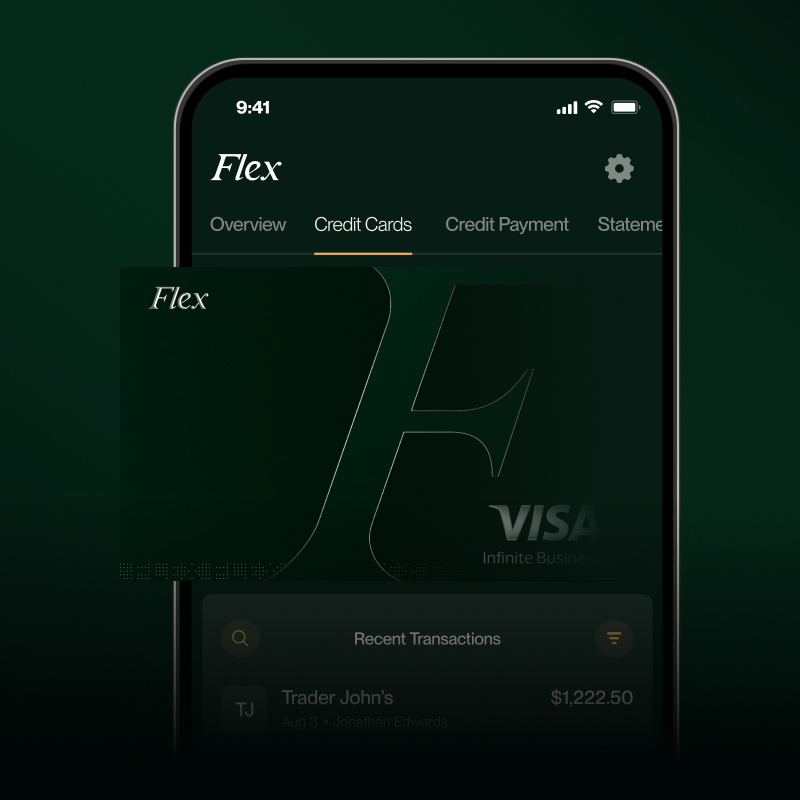


- In the charge card vs. credit card debate, repayment flexibility is the defining difference.
- A charge card requires full repayment every billing cycle.
- A credit card allows businesses to carry a balance within a defined limit.
- Growing companies benefit from structured float that aligns repayment with revenue.
- Flex Net-60 is a true business credit card offering extended terms and revolving capability, making it more strategic than a charge card for growing companies.
为何 Flex 并非典型的签账卡(以及这对成长型公司为何重要)
本文仅供参考,不旨在提供法律或财务建议,也不应被视为法律或财务建议。如果您对此主题有疑问,请咨询您自己的法律或会计顾问。
When comparing charge cards vs. credit cards, the difference isn’t branding, but repayment structure. And repayment structure determines how much control your business has over cash flow, runway, and growth.
For scaling companies, that difference is strategic.
In this guide, we’ll break down:
- The difference between a charge card and a credit card
- The pros and cons of each structure
- Why repayment flexibility matters during growth
- Why the Flex Net-60 Business Credit Card is built specifically for scaling companies
What is a Charge Card?
A charge card is a payment product that requires the full statement balance to be paid each month.
Key characteristics:
- No preset spending limit (in many cases)
- No ability to revolve a balance
- Full repayment required every billing cycle (30 days)
- Penalties if not paid in full
Charge cards are often marketed as premium products. They can encourage discipline and prevent long-term debt accumulation.
For stable businesses with predictable monthly revenue, this structure can work well.
But during periods of rapid growth, strict monthly payoff requirements can limit flexibility.
What is a Credit Card?
A credit card is a revolving line of credit that allows businesses or individuals to borrow up to a set limit and repay the balance over time.
A credit card provides:
- A defined credit limit
- The ability to carry a balance
- Minimum payment requirements
- Revolving credit capability
Unlike a charge card, a credit card doesn’t require full repayment each billing cycle and typically allows minimum payments on remaining balances.
This creates optionality, and optionality is powerful during growth.
Charge Card vs. Credit Card: The Core Difference
The difference between charge card and credit card products comes down to one question:
Do you need mandatory monthly payoff or strategic repayment flexibility?
Here’s a direct comparison:
When revenue and expenses move in perfect sync, a charge card can work.
But growth rarely moves in sync.
Hiring happens before revenue increases. Marketing spend precedes customer acquisition. Inventory is purchased before seasonal demand.
In these moments, repayment timing becomes strategic infrastructure.
Is a Charge Card Better Than a Credit Card?
For companies in aggressive growth mode, a traditional charge card is often far too rigid.
Consider the realities of scaling:
- Revenue fluctuates month to month
- Customer payment cycles may extend 30–60+ days
- Large investments occur before returns materialize
- Preserving cash extends runway and reduces dilution
A charge card demands full reconciliation every cycle, while credit card allows sequencing.
That sequencing creates room to:
- Protect operating cash
- Extend runway
- Avoid unnecessary short-term financing
- Align payables with receivables
In most scaling scenarios, a credit card structure is more aligned with how growth actually works. Particularly with a credit card offering extended terms.
Why Flex Net-60 is the Strategic Choice
Flex is intentionally not a charge card — but we’re not a typical credit card either.
The Flex Net-60 Business Credit Card is designed specifically for growing companies that need structured float, not rigid monthly resets.
What Makes Flex Net-60 Different?
Flex Net-60 offers:
- Unsecured credit
- Net-60 terms from the point of each transaction
- Revolving balance capability
- A structure that functions like a traditional credit card, but with extended payment terms
This means businesses have 60+ days from the time of each purchase before full repayment is due, with the ability to revolve balances as needed.
That is fundamentally different from a charge card requiring full monthly payoff.
How Flex Net-60 Supports Growth
Flex Net-60 is built around one principle:
Growing companies need time between investment and return.
With extended net terms and revolving capability, businesses can:
- Invest in hiring ahead of revenue
- Fund marketing campaigns before customer acquisition ramps
- Smooth vendor payments
- Preserve working capital
- Extend runway without raising capital prematurely
Instead of forcing a monthly reset, Flex aligns repayment timing with how modern companies operate.
That alignment creates confidence.
Charge Card Pros and Cons (In Context)
Charge Card Pros
- Encourages discipline
- Prevents long-term revolving balances
- Simple repayment structure
Charge Card Cons
- No built-in cash flow smoothing
- Mandatory monthly payoff
- Limited flexibility during rapid expansion
- Can create liquidity pressure when revenue timing shifts
For stable businesses, discipline may be enough.
For scaling companies, flexibility is infrastructure.
Charge Card vs. Credit Card: A Decision About Control
When evaluating charge card vs. credit card options, ask:
- Do your revenue cycles consistently align with expenses?
- Are you investing ahead of revenue growth?
- Would additional float extend your runway?
- Do you want rigid monthly payoff or structured flexibility?
The difference between charge card and credit card structures determines how much control you retain over liquidity.
对于成长型公司而言,这种控制力会产生复利效应。
最终结论:Flex Net-60 信用结构是增长的最佳选择
签账卡带来约束力。
信用卡带来杠杆效应。
Flex Net-60 商务信用卡提供杠杆效应 其 结构:延长账期、循环额度,以及专为规模化公司设计的信贷。
在签账卡和信用卡之间做出选择时,结构并非细枝末节。它是您能否自信成长的基础。而有了 Flex Net-60,选择就变得简单了。
准备好开始使用 Flex Net-60 了吗?如需了解更多信息,请直接联系我。
Flexbase Technologies, Inc. (Flex) 是一家金融科技公司,而非银行。Flex 商务信用卡由 Lead Bank 根据 Visa U.S.A. Inc. 的许可发行,且仅适用于符合条件的商业实体。费用和条款与条件适用。申请人须符合资格要求。