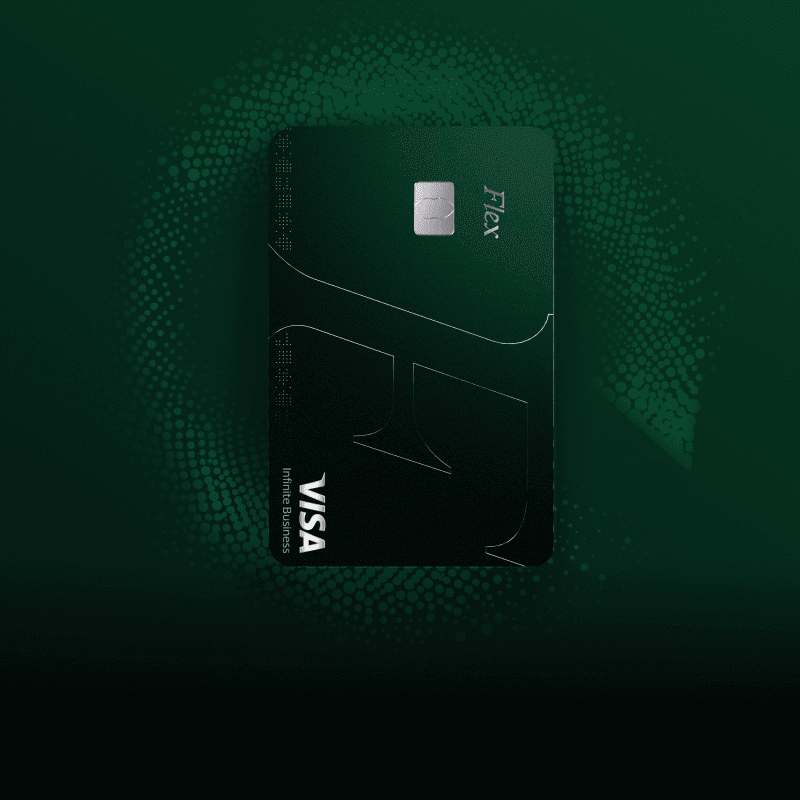


- In the charge card vs. credit card debate, repayment flexibility is the defining difference.
- A charge card requires full repayment every billing cycle.
- A credit card allows businesses to carry a balance within a defined limit.
- Growing companies benefit from structured float that aligns repayment with revenue.
- Flex Net-60 is a true business credit card offering extended terms and revolving capability, making it more strategic than a charge card for growing companies.
Flex가 일반적인 차지 카드가 아닌 이유 (그리고 이것이 성장 기업에 중요한 이유)
The following article is offered for informational purposes only, and is not intended to provide, and should not be relied on, for legal or financial advice. Please consult your own legal or accounting advisors if you have questions on this topic.
When comparing charge cards vs. credit cards, the difference isn’t branding, but repayment structure. And repayment structure determines how much control your business has over cash flow, runway, and growth.
For scaling companies, that difference is strategic.
In this guide, we’ll break down:
- The difference between a charge card and a credit card
- The pros and cons of each structure
- Why repayment flexibility matters during growth
- Why the Flex Net-60 Business Credit Card is built specifically for scaling companies
What is a Charge Card?
A charge card is a payment product that requires the full statement balance to be paid each month.
Key characteristics:
- No preset spending limit (in many cases)
- No ability to revolve a balance
- Full repayment required every billing cycle (30 days)
- Penalties if not paid in full
Charge cards are often marketed as premium products. They can encourage discipline and prevent long-term debt accumulation.
For stable businesses with predictable monthly revenue, this structure can work well.
But during periods of rapid growth, strict monthly payoff requirements can limit flexibility.
What is a Credit Card?
A credit card is a revolving line of credit that allows businesses or individuals to borrow up to a set limit and repay the balance over time.
A credit card provides:
- A defined credit limit
- The ability to carry a balance
- Minimum payment requirements
- Revolving credit capability
Unlike a charge card, a credit card doesn’t require full repayment each billing cycle and typically allows minimum payments on remaining balances.
This creates optionality, and optionality is powerful during growth.
Charge Card vs. Credit Card: The Core Difference
The difference between charge card and credit card products comes down to one question:
Do you need mandatory monthly payoff or strategic repayment flexibility?
Here’s a direct comparison:
When revenue and expenses move in perfect sync, a charge card can work.
But growth rarely moves in sync.
Hiring happens before revenue increases. Marketing spend precedes customer acquisition. Inventory is purchased before seasonal demand.
In these moments, repayment timing becomes strategic infrastructure.
Is a Charge Card Better Than a Credit Card?
For companies in aggressive growth mode, a traditional charge card is often far too rigid.
Consider the realities of scaling:
- Revenue fluctuates month to month
- Customer payment cycles may extend 30–60+ days
- Large investments occur before returns materialize
- Preserving cash extends runway and reduces dilution
A charge card demands full reconciliation every cycle, while credit card allows sequencing.
That sequencing creates room to:
- Protect operating cash
- Extend runway
- Avoid unnecessary short-term financing
- Align payables with receivables
In most scaling scenarios, a credit card structure is more aligned with how growth actually works. Particularly with a credit card offering extended terms.
Why Flex Net-60 is the Strategic Choice
Flex is intentionally not a charge card — but we’re not a typical credit card either.
The Flex Net-60 Business Credit Card is designed specifically for growing companies that need structured float, not rigid monthly resets.
What Makes Flex Net-60 Different?
Flex Net-60 offers:
- Unsecured credit
- Net-60 terms from the point of each transaction
- Revolving balance capability
- A structure that functions like a traditional credit card, but with extended payment terms
This means businesses have 60+ days from the time of each purchase before full repayment is due, with the ability to revolve balances as needed.
That is fundamentally different from a charge card requiring full monthly payoff.
How Flex Net-60 Supports Growth
Flex Net-60 is built around one principle:
Growing companies need time between investment and return.
With extended net terms and revolving capability, businesses can:
- Invest in hiring ahead of revenue
- Fund marketing campaigns before customer acquisition ramps
- Smooth vendor payments
- Preserve working capital
- Extend runway without raising capital prematurely
Instead of forcing a monthly reset, Flex aligns repayment timing with how modern companies operate.
That alignment creates confidence.
Charge Card Pros and Cons (In Context)
Charge Card Pros
- Encourages discipline
- Prevents long-term revolving balances
- Simple repayment structure
Charge Card Cons
- No built-in cash flow smoothing
- Mandatory monthly payoff
- Limited flexibility during rapid expansion
- Can create liquidity pressure when revenue timing shifts
For stable businesses, discipline may be enough.
For scaling companies, flexibility is infrastructure.
Charge Card vs. Credit Card: A Decision About Control
When evaluating charge card vs. credit card options, ask:
- Do your revenue cycles consistently align with expenses?
- Are you investing ahead of revenue growth?
- Would additional float extend your runway?
- Do you want rigid monthly payoff or structured flexibility?
The difference between charge card and credit card structures determines how much control you retain over liquidity.
성장 단계 기업에게는 통제가 복리 효과를 냅니다.
최종 결론: Flex Net-60 신용 구조가 성장에 유리합니다.
차지 카드는 절제력을 제공합니다.
신용 카드는 레버리지를 제공합니다.
Flex Net-60 비즈니스 신용 카드는 레버리지를 제공합니다 다음과 같은 구조: 연장된 순결제 조건, 회전 결제 기능, 그리고 성장 기업을 위해 설계된 신용.
차지 카드와 신용 카드 중 하나를 선택할 때, 구조는 사소한 부분이 아닙니다. 이는 얼마나 자신감 있게 성장할 수 있는지의 기반이 됩니다. Flex Net-60과 함께라면 선택은 간단합니다.
Flex Net-60을 시작할 준비가 되셨나요? 더 자세한 정보는 저에게 직접 문의해 주세요.
Flexbase Technologies, Inc. (Flex)는 금융 기술 회사이며 은행이 아닙니다. Flex 비즈니스 신용 카드는 Visa U.S.A. Inc.의 라이선스에 따라 Lead Bank에서 발행하며, 자격 요건을 갖춘 상업 법인에게만 제공됩니다. 수수료 및 약관이 적용됩니다. 신청자는 자격 요건을 충족해야 합니다.